History of Present Illness
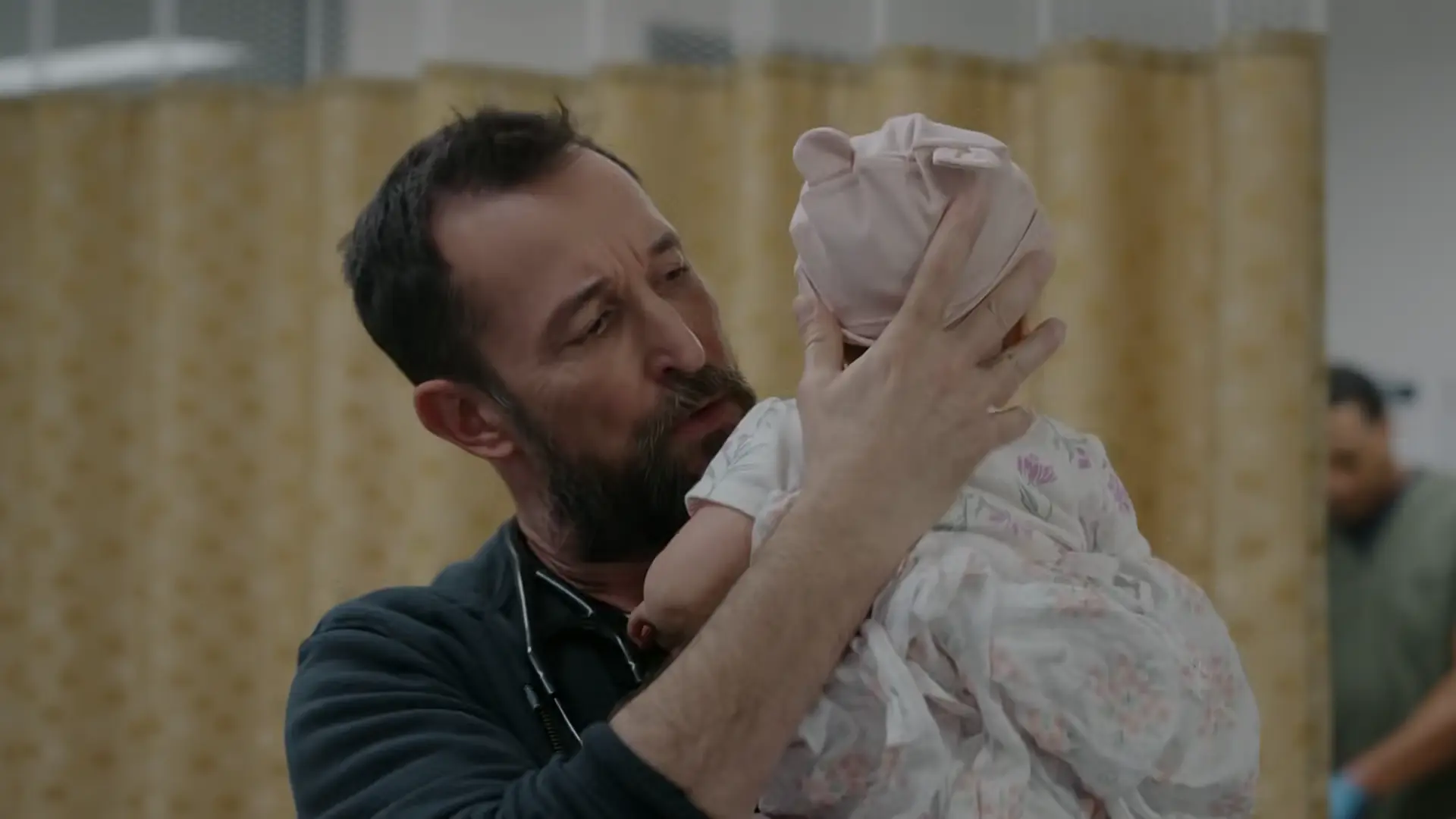
A 5-month-old female infant is brought to the ED by her mother for inconsolable crying. The mother reports no fever, vomiting, or cough. The infant is feeding well. She was born full-term via normal delivery and is up to date on her 2-month and 4-month childhood vaccinations. The mother mentions she showered before nursing the baby.
Emergency Department Course
Triage and Initial Evaluation
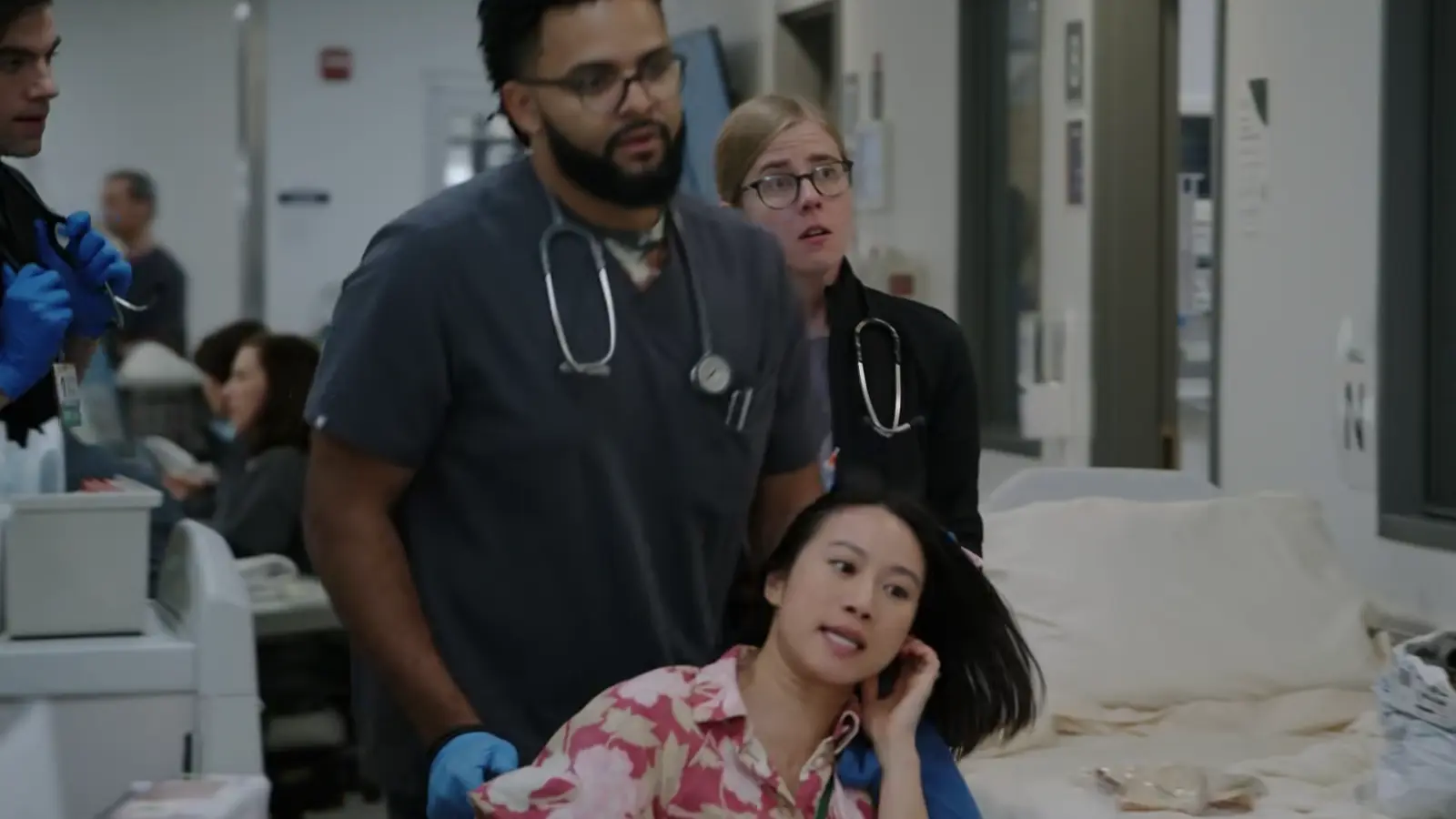
Patient presentation with continuous crying.
+1
Triage and Initial Evaluation
Patient presentation with continuous crying.
Medical Decision Making
Doctors evaluate an irritable infant. The priority is to rule out life-threatening causes of crying, such as severe bacterial infections, utilizing a rectal thermometer to get an accurate core temperature.
Diagnostics & Findings
- Rectal temperature measurement
- Pulse oximetry
Findings:
- Afebrile (99.2F)
- Tachycardic but otherwise normal vitals
- No evidence of systemic infection
Interventions
⮑ Outcome & Reassessment
The infant remains alert but continues to cry inconsolably. The absence of fever makes meningitis and severe bacterial infection highly unlikely. Dr. Robby enters to supervise the physical exam.
Clinical Media
Physical Examination and Diagnosis
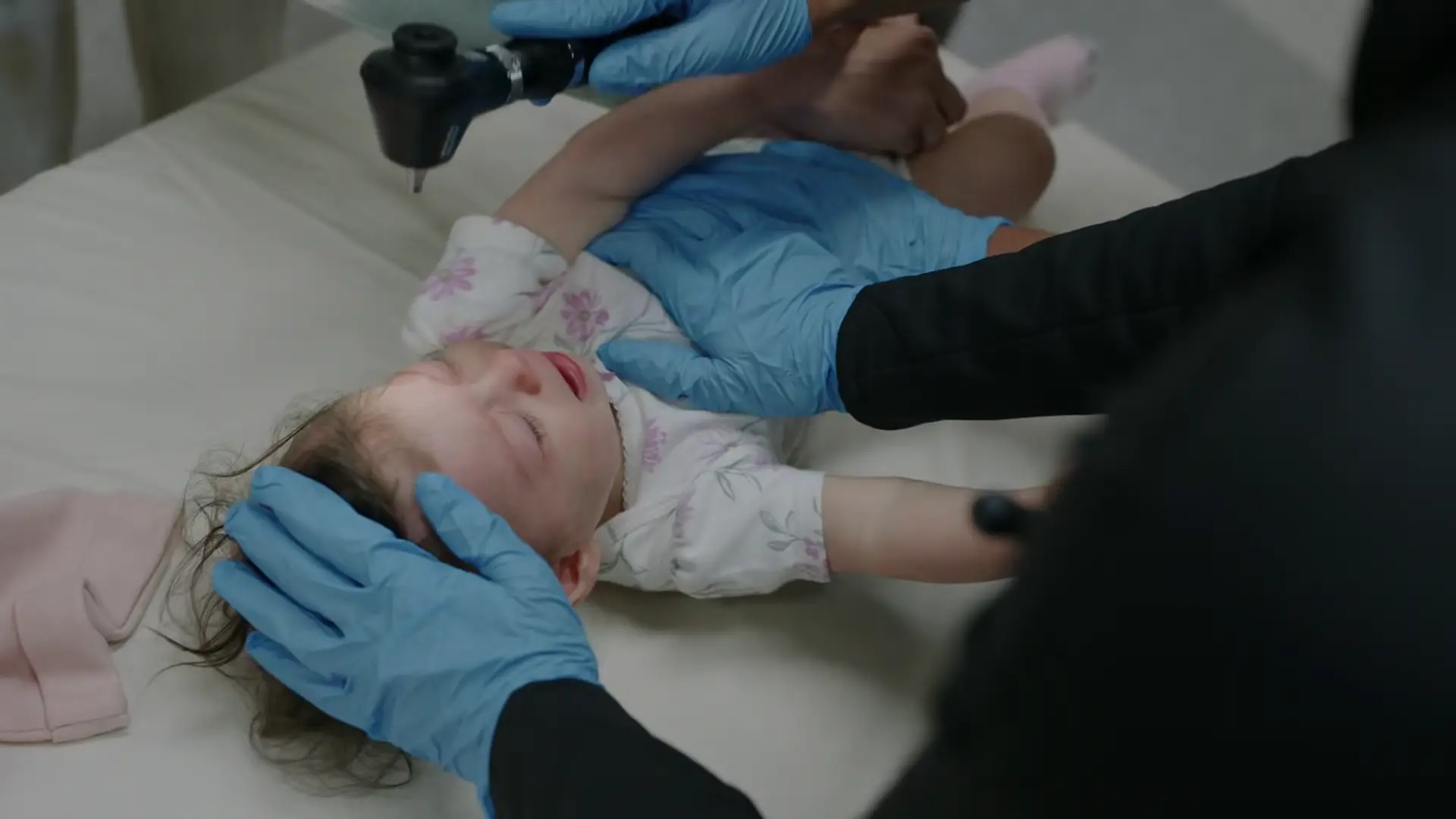
Continuing physical exam to find the source of pain.
+1
Physical Examination and Diagnosis
Continuing physical exam to find the source of pain.
Medical Decision Making
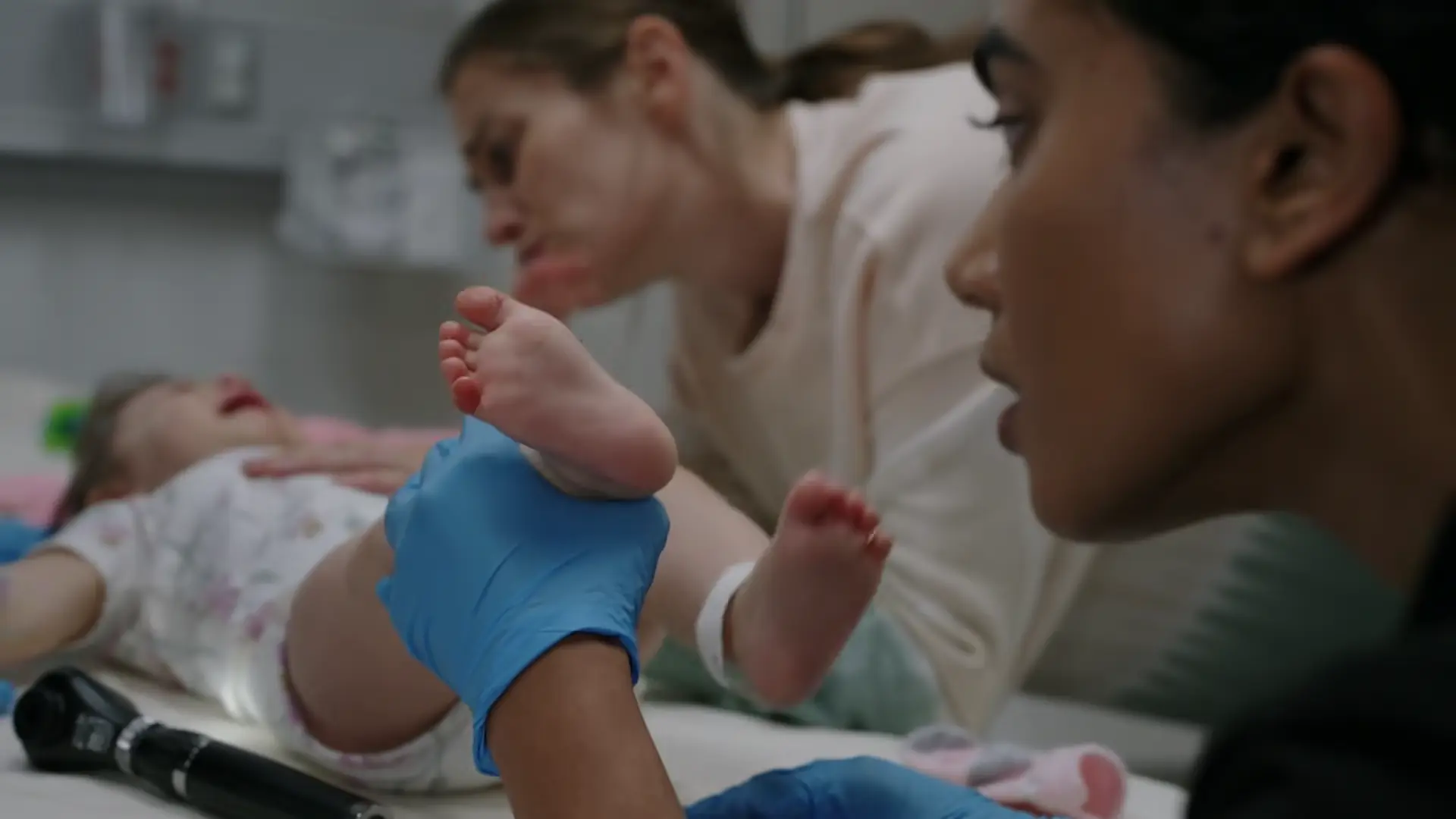
Dr. Mohan and Dr. King note a completely normal exam (soft fontanelle, clear lungs, soft abdomen). Since systemic and visceral issues are ruled out, Dr. Mohan looks for hidden external sources of localized pain. She identifies a hair tourniquet on the infant's toe.
Diagnostics & Findings
- Full physical examination
- Inspection of digits
Findings:
- Soft and flat fontanelle
- Moist mucous membranes
- Clear lungs
- Soft, non-tender abdomen
- Mother's hair wrapped multiple times around the infant's toe, cutting off circulation
Interventions
- Application of chemical depilatory (Nair) to the affected toe for 10 minutes to dissolve the hair
⮑ Outcome & Reassessment
Condition caught early. Chemical depilatory will dissolve the hair, stop the crying, and prevent any permanent ischemic damage to the toe.
Clinical Media
Diagnoses & Disposition
Evolving Diagnoses
- [S01E04]Inconsolable crying / Rule out infection
- [S01E04]Hair tourniquet syndrome of the toe
Current Disposition
Treated in ED and cleared for discharge. No permanent ischemic damage to the digit.
Casebook Analysis
Episode Context
This case acts as a valuable clinical teaching moment for doctors. It highlights the importance of the fundamentals of a meticulous physical exam over jumping to extreme zebras or pan-scanning an infant.
Attending's Review
Medical Accuracy
Highly accurate. Hair tourniquet syndrome is a classic pediatric emergency presentation for unexplained crying. Furthermore, the use of a chemical depilatory cream (like Nair) is an accurate, standard-of-care, non-invasive method to treat hair tourniquets in the ED, provided the skin is not broken, as it avoids the risk of accidental laceration from using a scalpel or scissors on a tiny, squirming digit.
Complications & Errors
- Mel nearly missed the diagnosis by focusing on complex systemic differentials (meningitis, nephrotic syndrome) before completing a full head-to-toe exam that included removing the patient's socks to check the digits.
Clinical Pearls
The pediatric physical exam: follow the 'least to most invasive' sequence to minimize agitation. 1. Begin with visual observation (assessing work of breathing, tone, and skin color) from a distance. 2. Proceed to quiet tasks like auscultating the heart and lungs while the infant is calm. 3. Next, perform palpation (abdomen, fontanelles, pulses). 4. Save the most distressing examinations (such as examining the oropharynx, otoscopy, etc.) for the very end. Agitating the patient too early can obscure subtle clinical findings like mild tachypnea, delicate murmurs, or baseline abdominal tenderness.
Rectal thermometry is the gold standard for assessing core body temperature in infants under 6 months of age. Peripheral methods (axillary, tympanic, temporal) are not 100% reliable in this age group, and obtaining an accurate core temperature is critical for determining the need for a full sepsis workup.
Always remove the socks and diaper when examining an inconsolable infant. Hair tourniquets (on toes, fingers, or genitalia) and inguinal hernias are easily missed but easily diagnosed once exposed.
Chemical depilatory agents (such as Nair) are a safe and effective first-line treatment for hair tourniquets, as they chemically break down the hair without requiring sharp instruments near the infant's skin.
Similar Cases from The Show
Jia Yi Chen
Jiya

Kristi Wheeler
17-year-old Medication Abortion Patient
Peggy Baylock
Cockroach Ear Lady