History of Present Illness
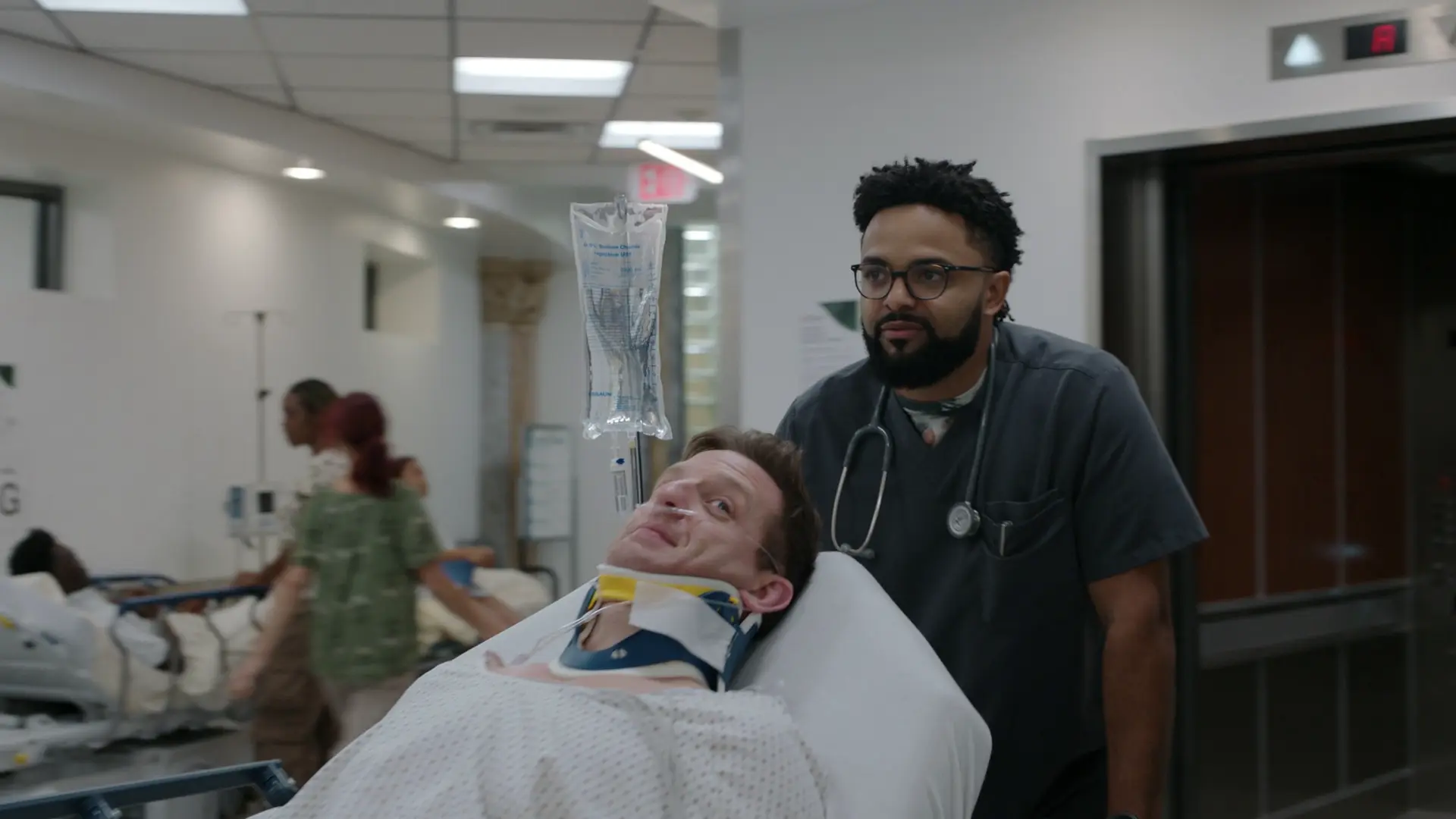
45-year-old male presents after falling approximately 8 feet (2.44 meters) from a ladder. He landed on his right chest on a carpeted floor. Wife called 911. Patient reports feeling 'a bit dizzy' just prior to the fall, prompting the team to investigate medical causes of syncope alongside the blunt trauma.
Emergency Department Course
Initial Assessment
Patient arrival via EMS after a fall from height.
+1
Initial Assessment
Patient arrival via EMS after a fall from height.
Medical Decision Making
Patient is stable but suffered significant blunt mechanism. Because he felt dizzy prior to the fall, Doctors must rule out a primary cardiac or neurological event (syncope) as the cause. E-FAST is required to rule out immediate life-threatening hemorrhage or pneumothorax.
Diagnostics & Findings
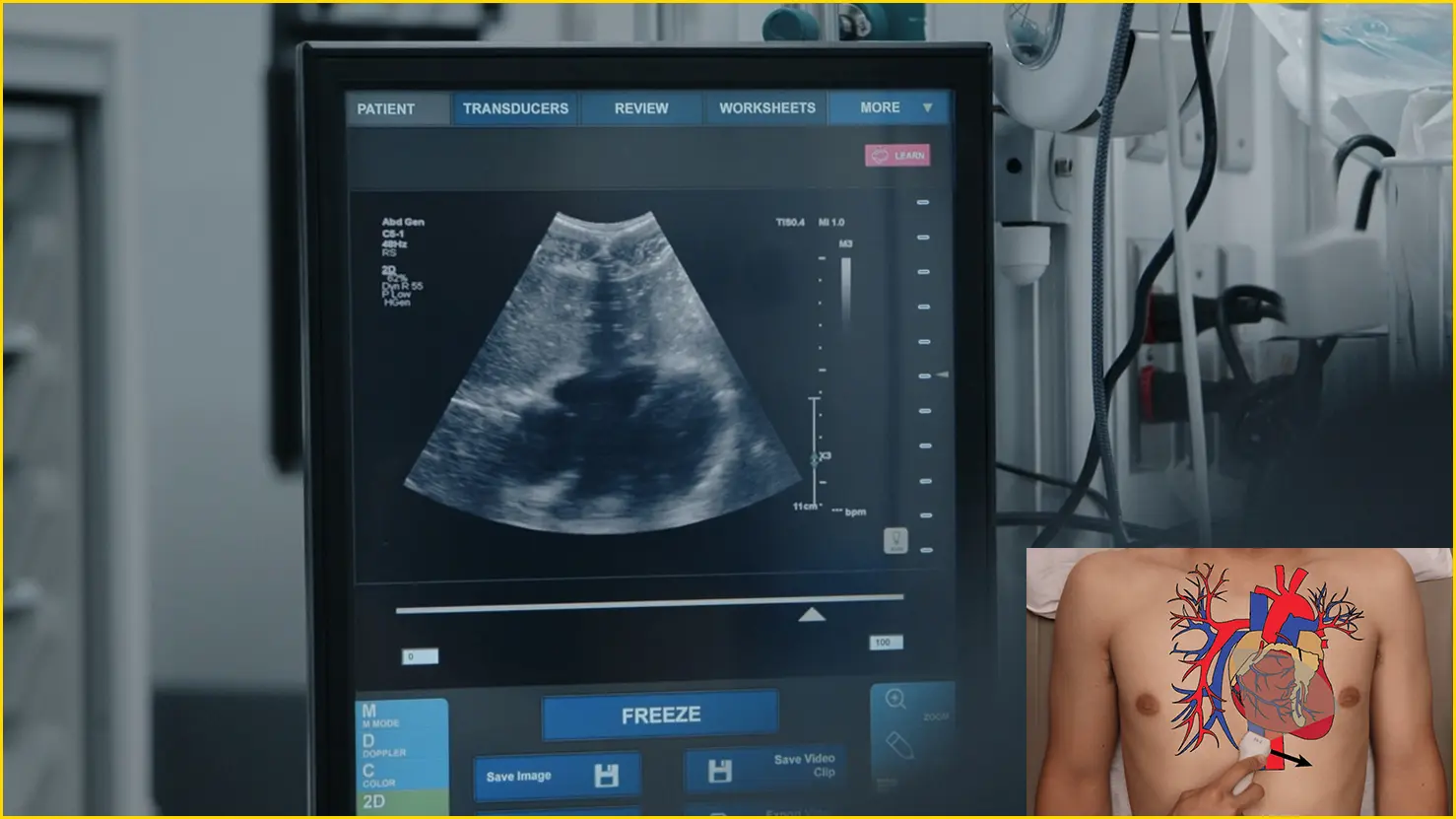
- E-FAST (Sonography)
- Cognitive check (Spelling WORLD backward)
- ECG ordered
- Troponin ordered
- CT Head ordered
Findings:
- Cognition intact (spelled D-L-R-O-W).
- No pericardial effusion on E-FAST.
- Tenderness palpated over 7th and 8th ribs on the right.
Interventions
- IV access established
⮑ Outcome & Reassessment
Patient remains stable and conversational. Awaiting CT and lab results.
Clinical Media
Clinical Deterioration
Patient becomes short of breath post-CT, then loses consciousness.
Clinical Deterioration
Patient becomes short of breath post-CT, then loses consciousness.
Medical Decision Making
Patient lost radial pulses with a precipitous drop in blood pressure and narrowed pulse pressure. Given the right rib fractures and the small hemothorax seen on CT, he is likely bleeding massively into the right pleural space from a sheared intercostal artery, causing a tension hemothorax. This impairs venous return, causing obstructive/hypovolemic shock. Need immediate tube thoracostomy. Must delay intubation until the chest tube is placed to avoid causing a tension physiology from positive pressure ventilation.
Diagnostics & Findings
- CT Head and Neck (prior to crash)
Findings:
- CT Head/Neck normal.
- CT Chest showed 'small hemothorax on the right'.
- Clinical exam reveals absent radial pulses and tense carotids.
Interventions
- 100% O2 via Non-Rebreather mask
- Ordered two units of PRBCs (Hemocue and type & cross)
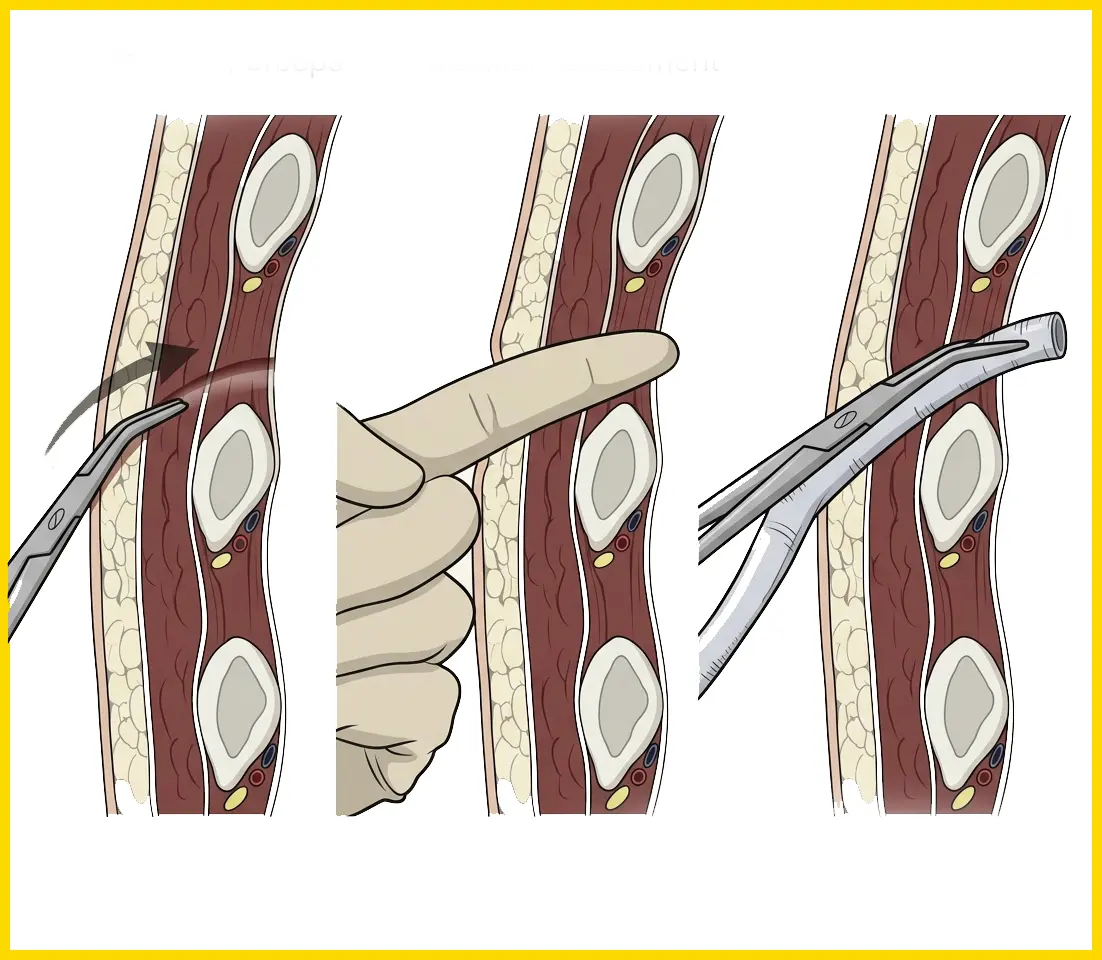
- Prepped for 20 French chest tube insertion
⮑ Outcome & Reassessment
Patient is in extremis. Proceeding immediately to chest tube insertion.
Chest Tube Procedure
Need for emergent chest tube to relieve hemothorax and stabilize hemodynamics.
+2
Chest Tube Procedure
Need for emergent chest tube to relieve hemothorax and stabilize hemodynamics.
Medical Decision Making
Landmark for chest tube is the 5th intercostal space, anterior axillary line. Dissection through the intercostal muscles is required.
Diagnostics & Findings
Findings:
- Significant amount of breast tissue noted during palpation of landmarks.
Interventions
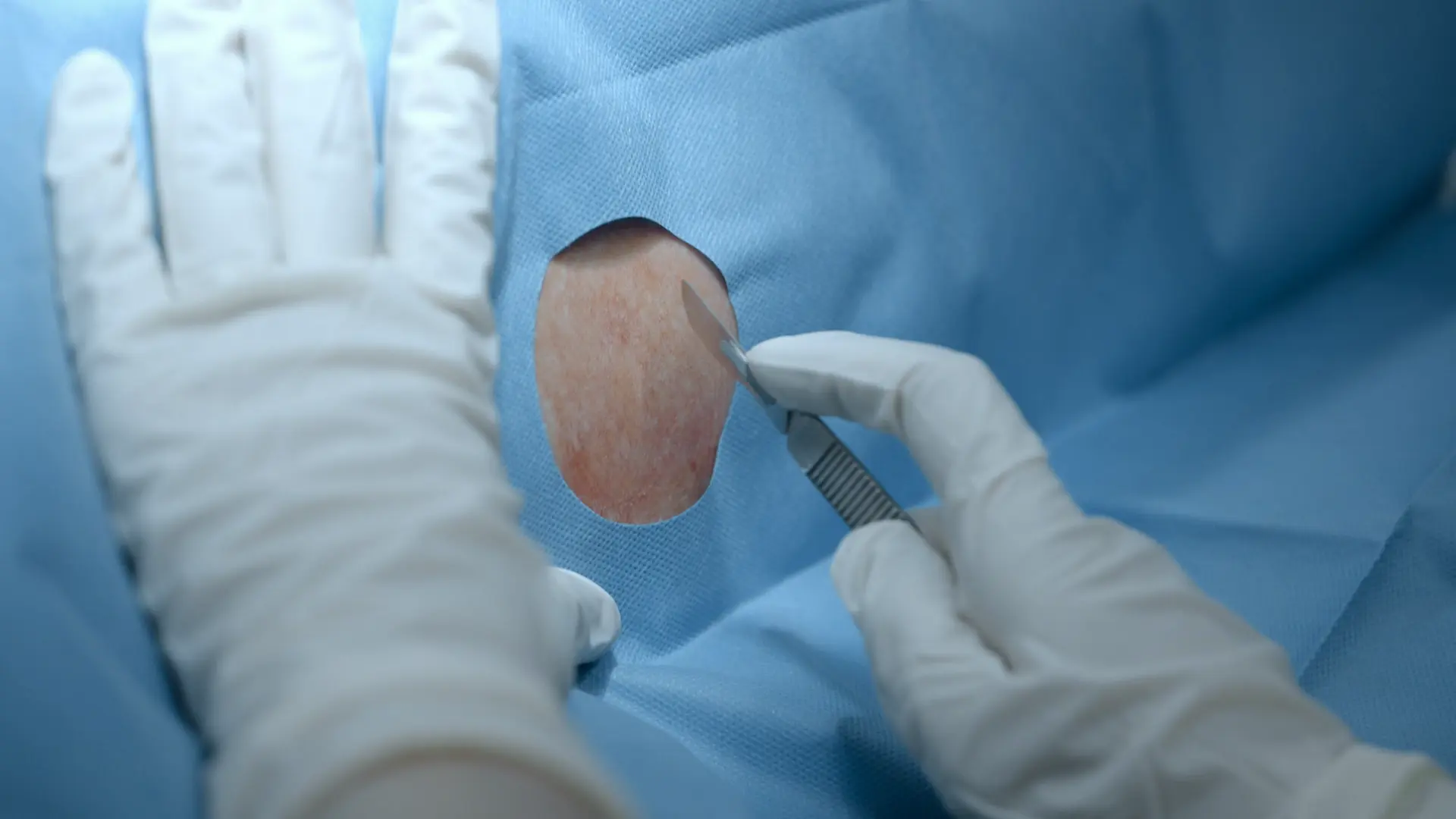
- Scalpel (#10 blade) utilized for incision at 5th intercostal space.
- Chest tube inserted and secured.
- Endotracheal intubation performed shortly after tube placement to manage hypoxia.
⮑ Outcome & Reassessment
While placing the tube, Dr. Santos drops the loaded #10 scalpel, which punctures Dr. Garcia's foot. Patient is eventually stabilized and intubated.
Clinical Media
Male Gynecomastia
Follow-up on chest tube output and physical exam abnormality noted during the procedure.
Male Gynecomastia
Follow-up on chest tube output and physical exam abnormality noted during the procedure.
Medical Decision Making
The chest tube has drained 650cc and slowed, meaning the acute hemorrhage is controlled. However, bilateral symmetrical breast enlargement without a discrete mass was noted during the thoracostomy. This is clinical gynecomastia. A trauma patient with new/undiagnosed gynecomastia requires a systemic workup, focusing on hepatic failure (alcohol abuse impairs estrogen clearance) or an endocrinopathy (testicular/pituitary tumor).
Diagnostics & Findings
- Liver function tests ordered
- Hormone panel ordered: Estrogen, Testosterone, Prolactin, HCG, Progesterone
Findings:
- Chest tube output stabilized at 650cc.
- Bilateral, symmetrical gynecomastia confirmed.
Interventions
⮑ Outcome & Reassessment
Trauma stabilized; pivot to investigating chronic/systemic underlying illness.
Diagnoses & Disposition
Evolving Diagnoses
- [S01E06]Suspected Rib Fractures (7th and 8th right)
- [S01E06]Right Hemothorax progressing to Obstructive/Hypovolemic Shock
- [S01E06]Bilateral Gynecomastia (Etiology unknown, workup pending)
Current Disposition
Admitted (Intubated, awaiting endocrine and hepatic lab results)
Casebook Analysis
Episode Context
Silas's case serves a dual narrative purpose. First, it forces Dr. Santos, an intern, into a high-stakes, rapid-deterioration scenario that results in a severe physical error under pressure (accidentally drops a surgical scalpel on Garcia's foot). Second, it utilizes the medical drama trope of uncovering a mysterious, unrelated systemic illness (gynecomastia) during a routine trauma evaluation.
Attending's Review
Medical Accuracy
The initial trauma presentation is quite accurate: rib fractures can shear intercostal vessels, leading to a delayed but massive hemothorax and rapid hemodynamic collapse. Furthermore, Dr. Robby's decision to delay intubation until the chest tube is placed is an excellent, real-world clinical pearl. Positive pressure ventilation prior to chest decompression in a hemothorax/pneumothorax can rapidly precipitate a fatal tension physiology. The pivot to an endocrine workup for gynecomastia after patient stabilisation is clinically sound, though ordering a full hormone panel from the ER for an intubated trauma patient is a bit of a TV acceleration of what would normally be an inpatient medicine workup.
Complications & Errors
- Dr. Santos drops a scalpel during a chaotic chest tube insertion. This is a severe breach of sharps safety and highlights the dangers of loss of fine motor control during acute stress.
Clinical Pearls
When a patient falls, always investigate a medical cause of the fall (syncope, arrhythmia, neuro event) in addition to treating the blunt trauma injuries.
In suspected tension pneumothorax or massive hemothorax, decompress the chest BEFORE intubating if the patient is maintaining their airway. Positive pressure ventilation can worsen tension physiology and cause cardiovascular collapse.
In the setting of acute traumatic hemothorax, a larger bore traditional chest tube (e.g., 28-32 French, though 20 French was used here) is generally preferred over a smaller pigtail catheter (used in Wendel Stone's S01E04 case of pneumothorax). Acute traumatic blood can clot rapidly, occluding smaller catheters, which worsens tension physiology and obscures accurate measurement of blood loss.
New onset bilateral gynecomastia in adult men warrants a systemic workup, commonly focusing on cirrhosis (impaired estrogen metabolism), medications, and tumors (testicular or pituitary).
Similar Cases from The Show
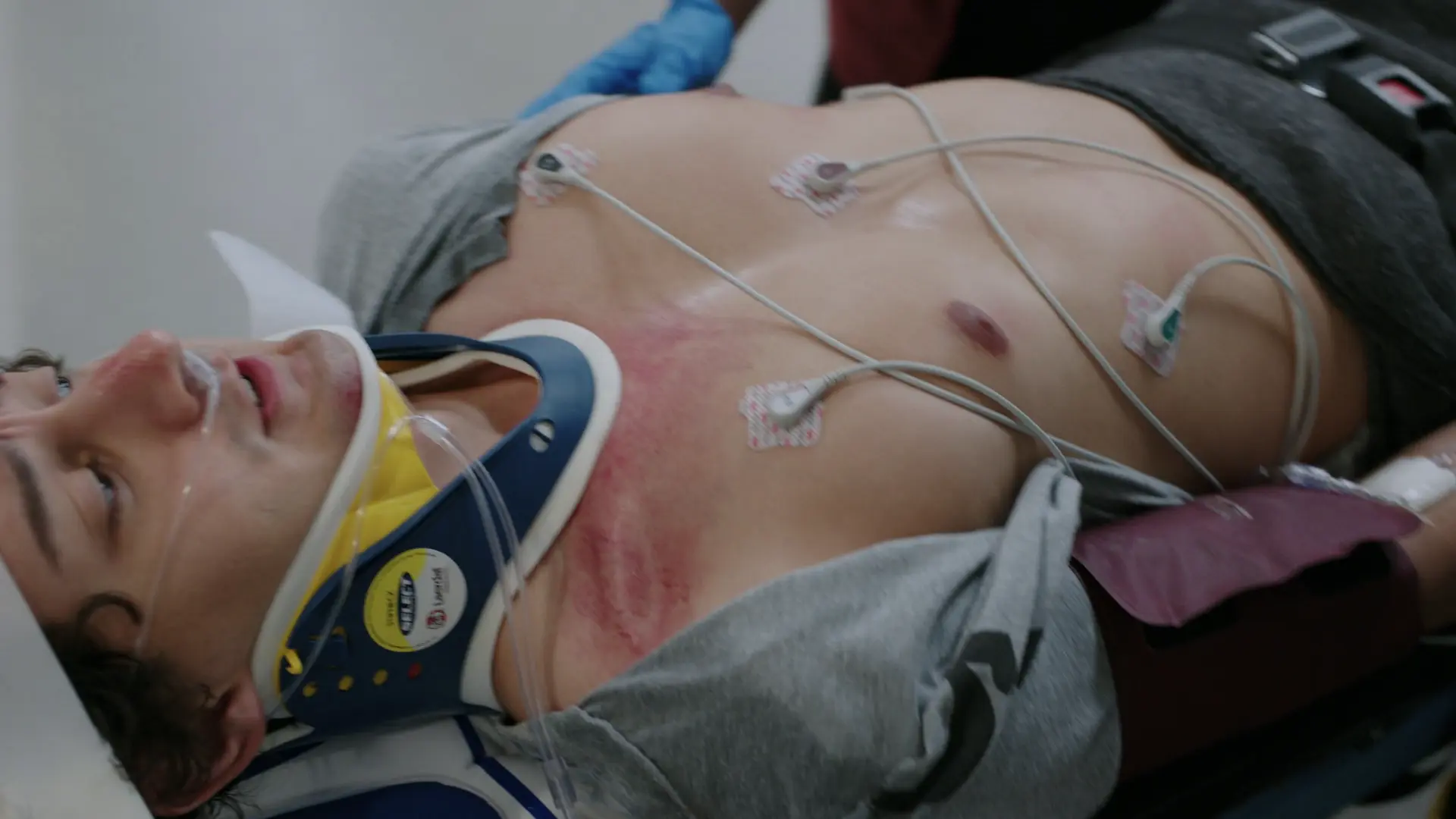
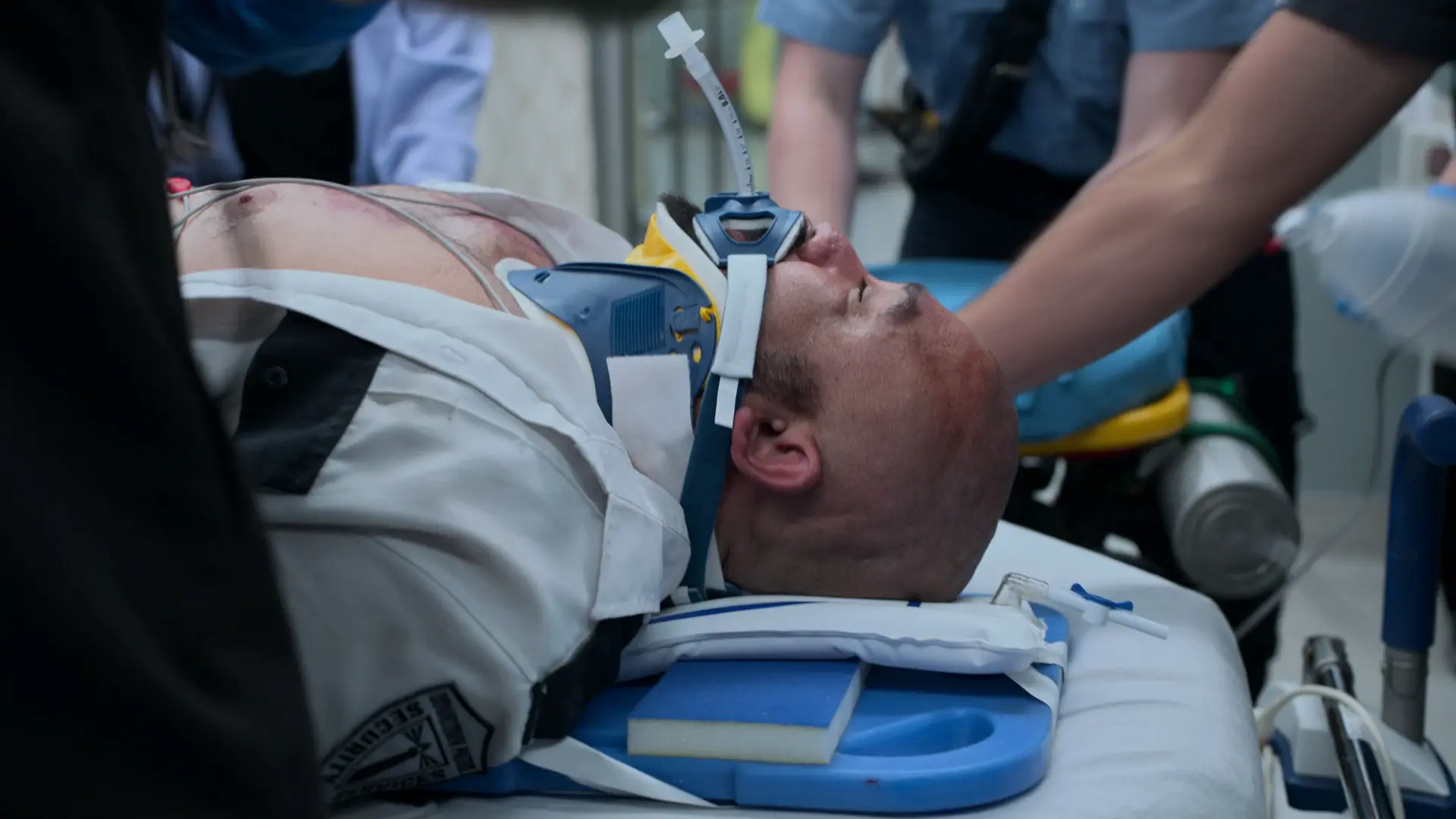
Chart Navigation
Silas Dunn
C/ORight chest pain following a fall from an 8-foot ladder.