History of Present Illness
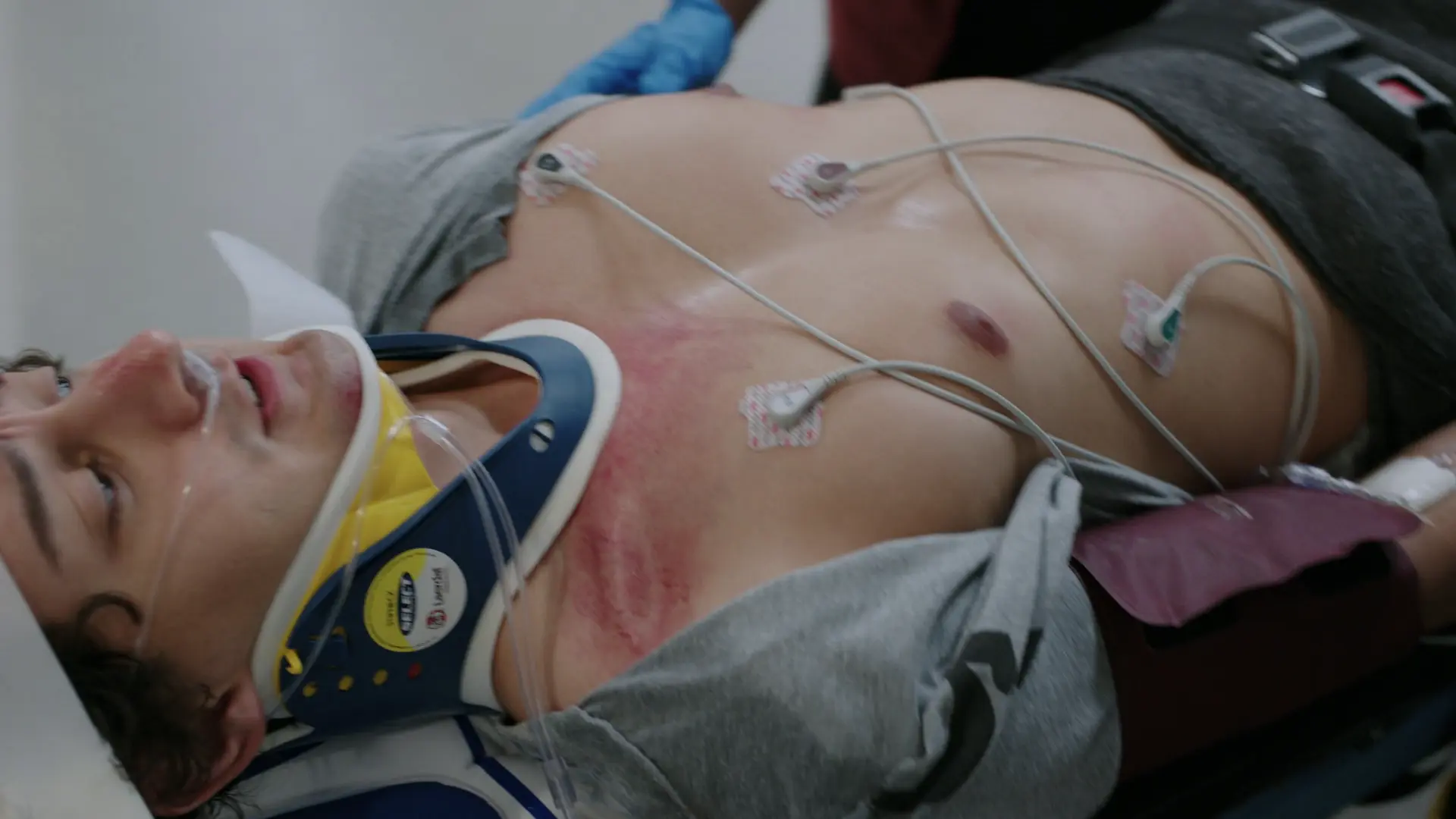
18-year-old male presents to the ED under police escort after stealing an ambulance and crashing it into a tree. The patient was the driver. He presents with severe shortness of breath, stridor, right chest pain, and left leg deformity. His passenger, Zac, suffered only minor lacerations.
Emergency Department Course
Initial Assessment
Patient arrival post-MVA with marked respiratory distress and audible stridor.
+1
Initial Assessment
Patient arrival post-MVA with marked respiratory distress and audible stridor.
Medical Decision Making
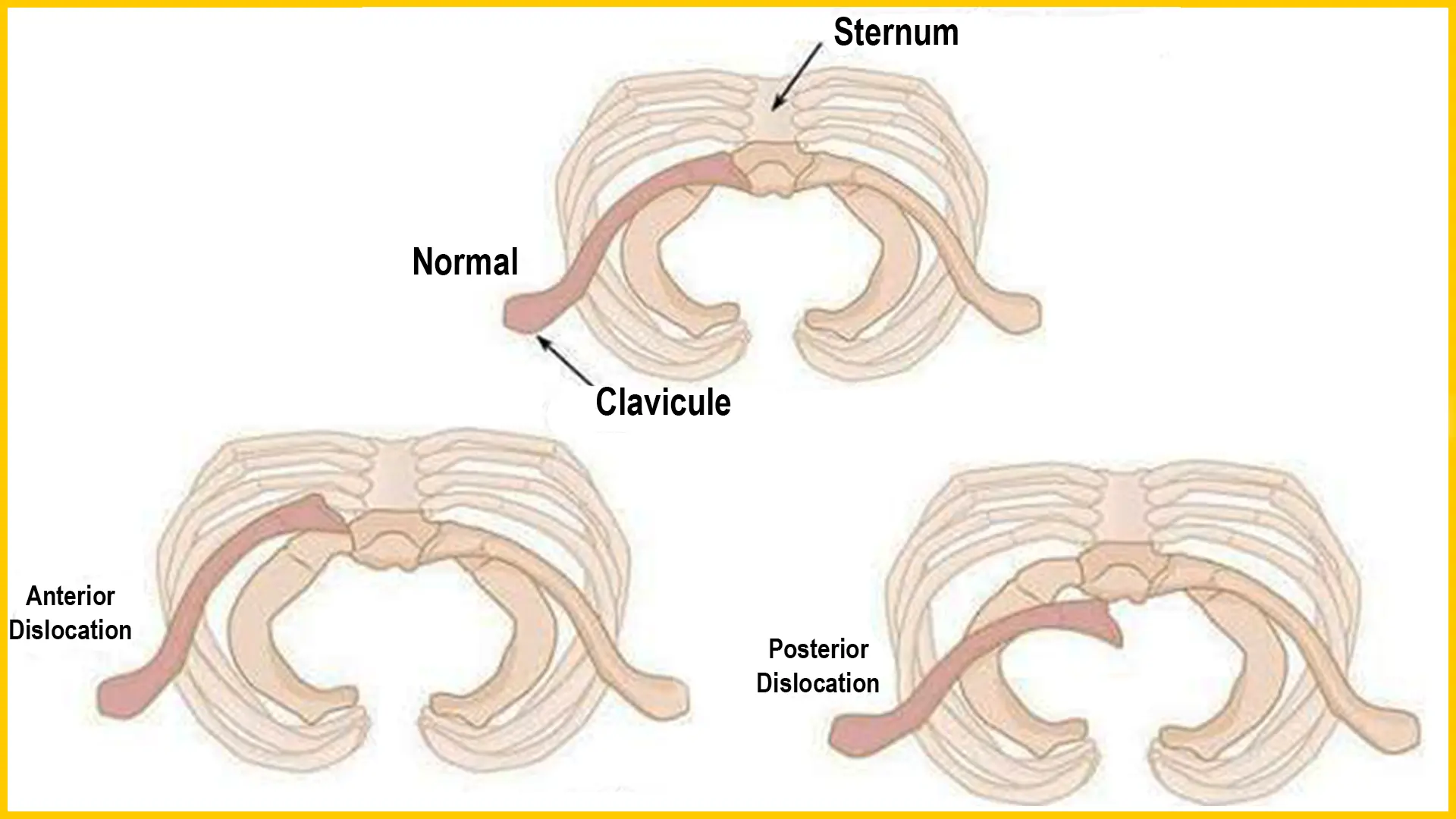
Patient is stridorous with bilateral breath sounds, indicating an upper airway obstruction rather than a pneumothorax or lower airway issue. A visible depression of the medial clavicle confirms a posterior sternoclavicular (SC) dislocation impinging on the trachea. This is an impending airway disaster requiring emergent reduction before attempting intubation, which could be physically blocked by the bone.
Diagnostics & Findings
- Primary trauma survey
- E-FAST (ordered)
Findings:
- Bilateral breath sounds present
- Stridor
- Medial clavicle depressed posteriorly (Sternoclavicular dislocation)
- Left hip flexed, adducted, and internally rotated (Posterior hip dislocation)
Interventions
- Administered 4 doses of morphine
- Prepared intubation medications: Ketamine and Rocuronium on standby
- Ordered comprehensive blood test
- Cleared oropharynx
⮑ Outcome & Reassessment
Patient remained in respiratory distress; provider proceeded immediately to closed reduction of the SC joint.
Clinical Media
Clavicle Reduction
Tracheal compression leading to hypoxia and stridor.
+1
Clavicle Reduction
Tracheal compression leading to hypoxia and stridor.
Medical Decision Making
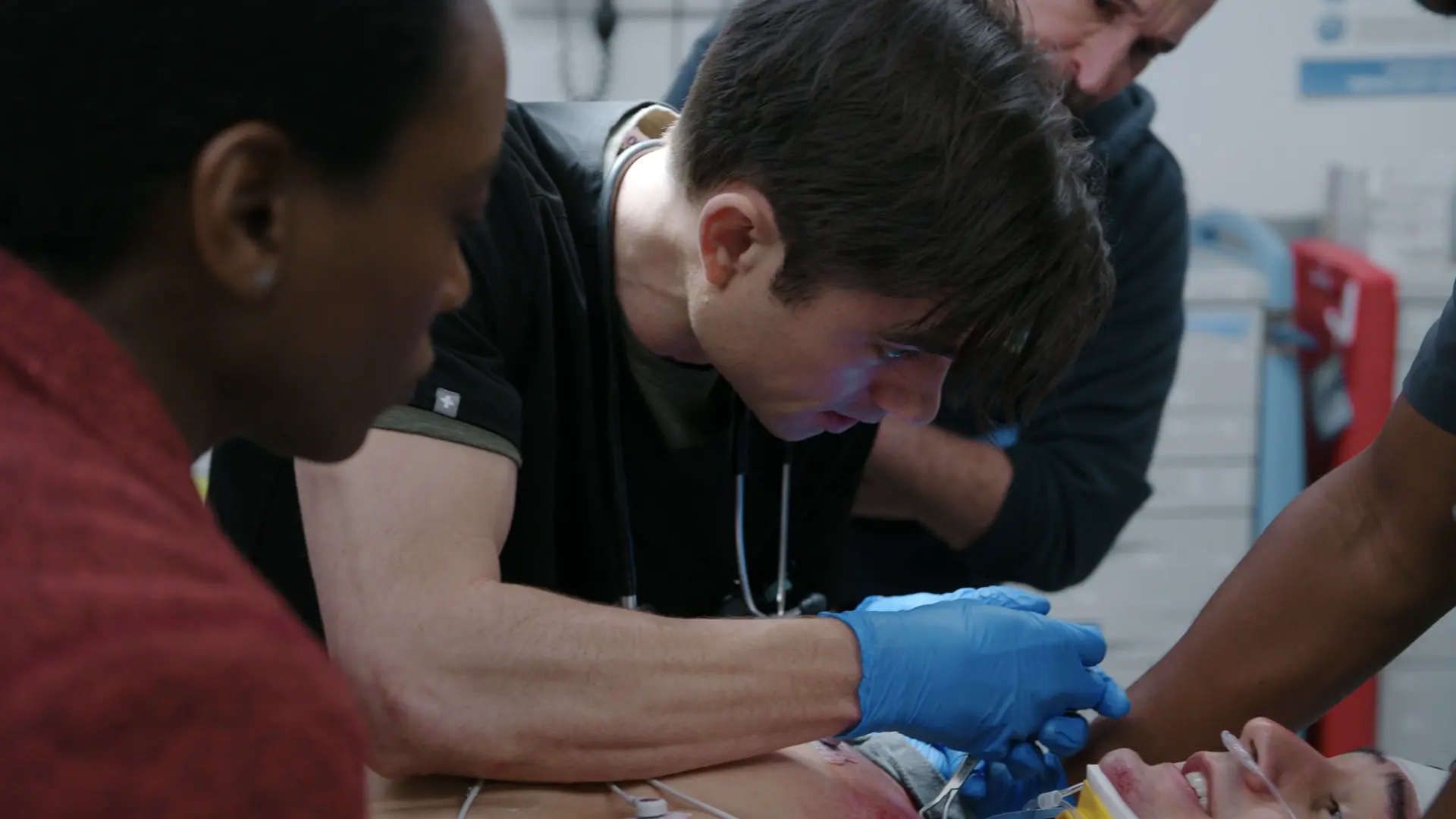
With the trachea compromised, conservative management is not an option. Dr, Langdon must perform emergent closed reduction using the towel clip technique (percutaneous grip of the medial clavicle) under local anesthesia to physically lift the bone off the airway.
Diagnostics & Findings
Interventions
- Prepped skin with chlorhexidine
- Injected 10cc Lidocaine with Epinephrine locally
- Utilized clamp scissors (towel clip) to firmly grip the medial clavicle
- Applied anterior and lateral traction to successfully reduce the sternoclavicular joint
⮑ Outcome & Reassessment
Patient shouted in pain during the maneuver but the reduction was immediately successful. Breathing improved significantly, and stridor resolved.
Clinical Media
Hip Reduction
Secondary major injury management: Posterior hip dislocation.
+1
Hip Reduction
Secondary major injury management: Posterior hip dislocation.
Medical Decision Making
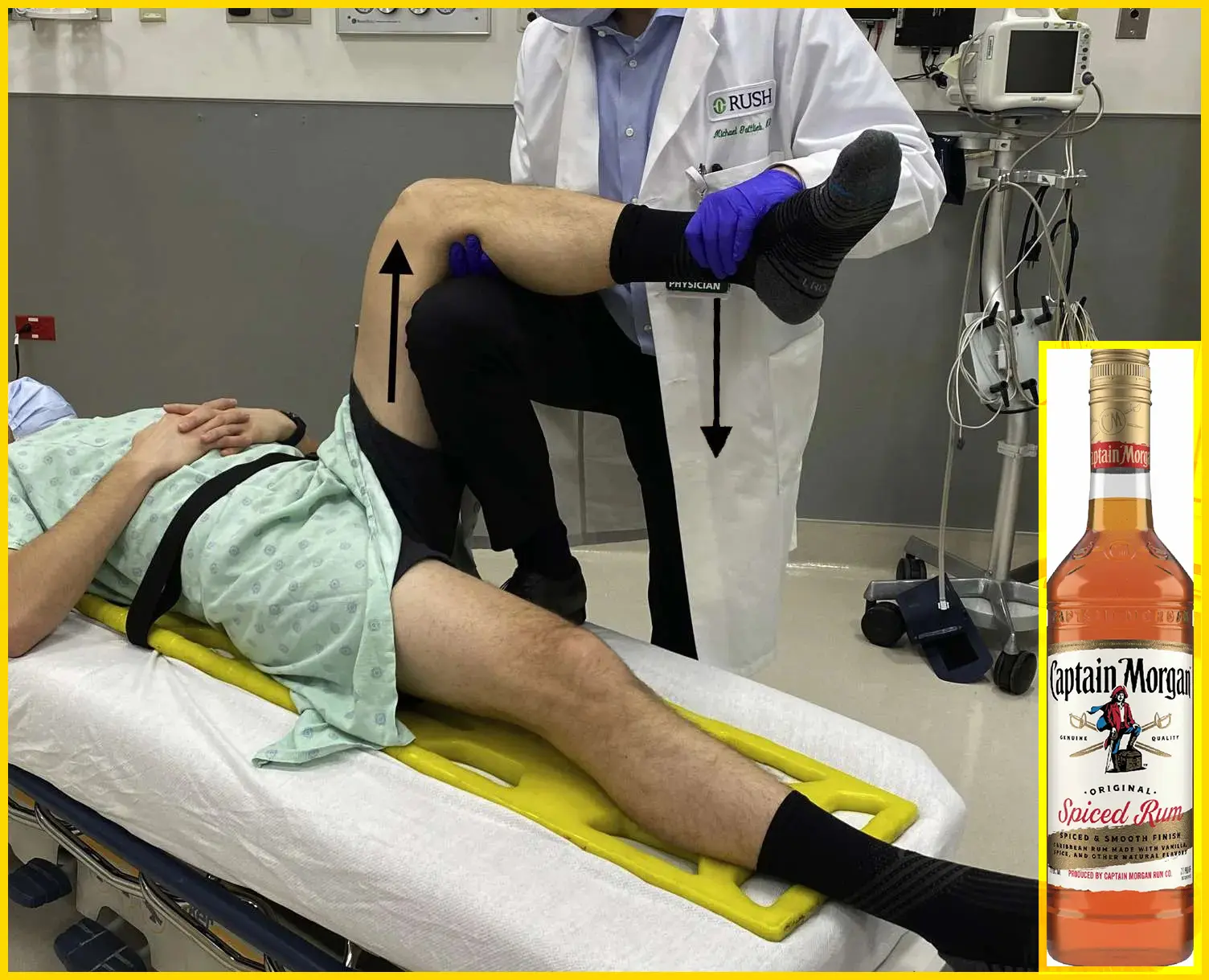
Patient's airway is now secure. The posterior hip dislocation must be reduced to prevent avascular necrosis of the femoral head. The 'Captain Morgan' technique uses leverage and biomechanics to provide maximal anterior force with minimal physician fatigue.
Diagnostics & Findings
- CT Scan (completed to rule out concurrent acetabular fractures)
Findings:
- Confirmed simple posterior hip dislocation without impeding fractures
Interventions
- Instructed assistant to stabilize the pelvis
- Performed 'Captain Morgan' technique: provider places their foot on the bed under the patient's knee, using their own knee as a fulcrum to apply anterior force to the patient's femur while pushing down on the ankle.
⮑ Outcome & Reassessment
A palpable 'clunk' (dor) was felt. Hip was successfully reduced and stabilized.
Clinical Media
Diagnoses & Disposition
Evolving Diagnoses
- [S01E06]Posterior Sternoclavicular Dislocation with Tracheal Compression
- [S01E06]Posterior Hip Dislocation
Current Disposition
Admitted and stable. SC joint and hip successfully reduced. Under police supervision.
Casebook Analysis
Episode Context
Miles is an 18-year-old college student who, along with his friend Zac, stole an ambulance to look cool on campus. They crashed into a tree during a police pursuit. The case provides a fast-paced, high-acuity trauma scenario that contrasts the teenagers' foolish choices with the life-or-death reality of the emergency department.
Attending's Review
Medical Accuracy
The depiction of a posterior sternoclavicular dislocation causing airway obstruction (stridor) is highly accurate and represents a true orthopedic emergency. The use of a towel clip (referred to as clamp scissors) percutaneously to grip the clavicle and pull it anteriorly is the correct textbook maneuver. Additionally, demonstrating the 'Captain Morgan' technique for posterior hip reduction is highly accurate; it is a modern, favored ED technique that shows excellent attention to detail by the show's medical consultants.
Clinical Pearls
Posterior sternoclavicular dislocations can be life-threatening if the medial clavicle compresses the trachea or great vessels in the mediastinum. Emergent reduction is required.
While advanced imaging (like a CT scan) is usually the gold standard for evaluating a sternoclavicular injury to rule out fractures before reduction, in a patient with life-threatening airway compromise, emergent clinical reduction takes precedence over obtaining radiographic confirmation. The mechanical obstruction to the trachea must be relieved immediately.
The towel clip technique is a standard closed reduction method for posterior SC dislocations: grasp the medial clavicle percutaneously with a towel clip and apply anterior/lateral traction.
The Captain Morgan technique is an ergonomically advantageous method for reducing posterior hip dislocations, utilizing the provider's knee as a fulcrum to generate upward force on the patient's femur, minimizing physician fatigue.
A hallmark sign of a successful posterior hip reduction, including when using the Captain Morgan technique, is a distinct, palpable, and often audible 'clunk' or 'click' as the femoral head relocates into the acetabulum, providing immediate clinical confirmation before post-reduction imaging.
Similar Cases from The Show
Ben Kemper
Scooter vs. Car Door
Frida Cohen
Elderly Auto vs Pedestrian
Ginger Kitajima
Elderly Fall Victim
Related Specialties
Chart Navigation
Miles Hernandez
C/ORight chest pain, left leg pain, and shortness of breath following a motor vehicle collision (ambulance into a tree).