History of Present Illness
35-year-old male architect presents to the ED with acute onset palpitations. Patient reports working on a deadline and vaping nicotine heavily all night, consuming 'a couple of pods'. Each pod contains approximately 40mg of nicotine. Patient admits to daily use but notes this was a significant binge. A smartwatch interrogation revealed his heart rate spiked exactly 92 minutes prior to evaluation.

Emergency Department Course
Initial Assessment and Intervention
Patient evaluated for acute palpitations and discovered to be in hypotensive Atrial Fibrillation.
+1
Initial Assessment and Intervention
Patient evaluated for acute palpitations and discovered to be in hypotensive Atrial Fibrillation.
Medical Decision Making
Patient is in Atrial Fibrillation with Rapid Ventricular Response (RVR) and is hemodynamically unstable, evidenced by a systolic blood pressure of 90. This mandates immediate synchronized cardioversion. Because the smartwatch confirmed the arrhythmia started only 92 minutes ago, the patient is well within the 12-48 hour safe window. Therefore, there is an extremely low risk of a left atrial appendage thrombus, meaning cardioversion can safely proceed without a prior Transesophageal Echocardiogram (TEE).
Diagnostics & Findings
- Smartwatch data interrogation
- Continuous cardiac monitoring
Findings:
- Atrial Fibrillation at 147 bpm
Interventions
- Propofol 75mg slow IV push for procedural sedation
- Synchronized electrical cardioversion at 200 Joules
⮑ Outcome & Reassessment
Patient successfully converted to Normal Sinus Rhythm (NSR) after a single 200J shock. Blood pressure cycling initiated.
Clinical Media
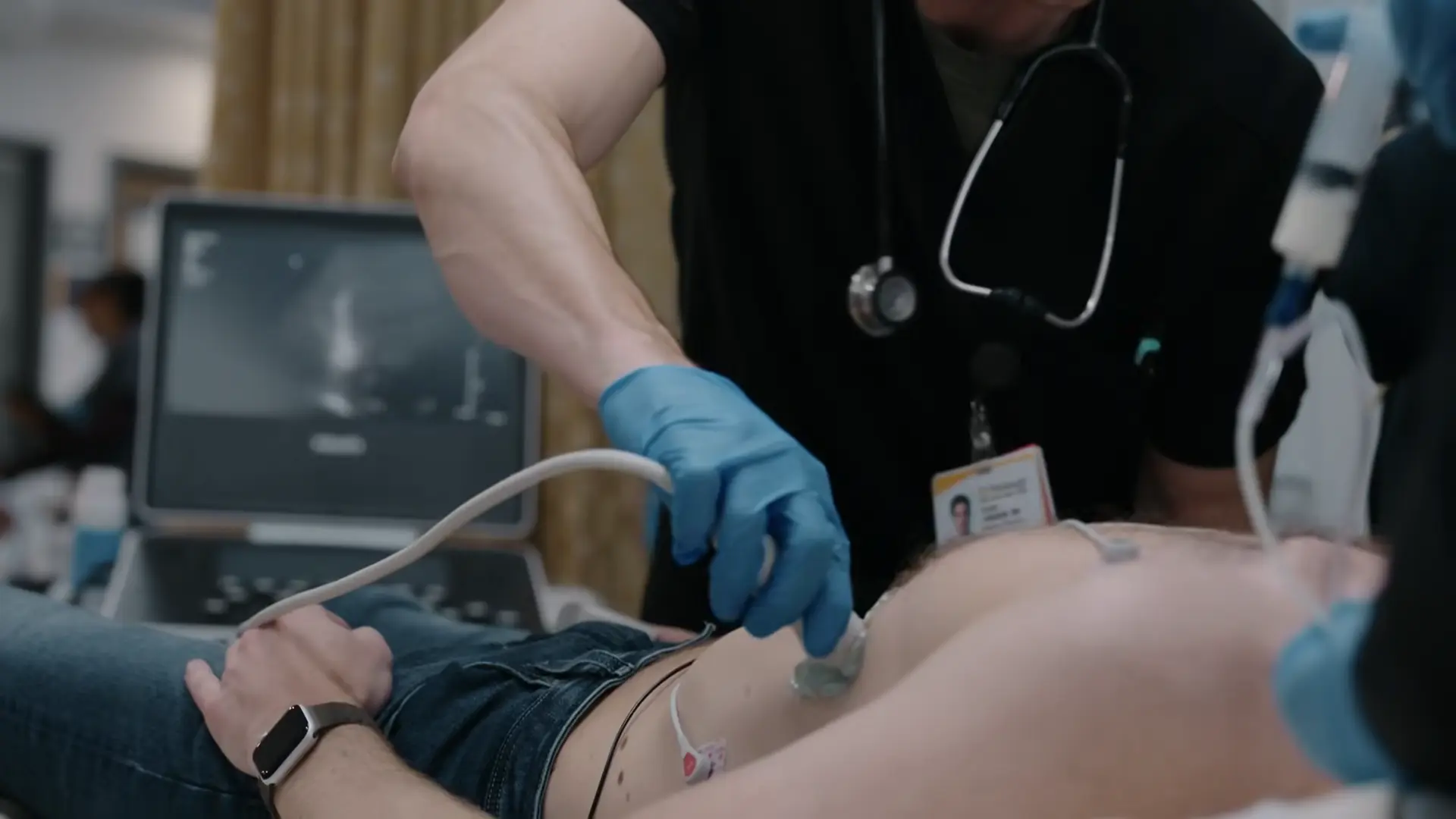
Post-Resuscitation Care and Disposition
Post-cardioversion planning and addressing the underlying trigger (nicotine toxicity).
Post-Resuscitation Care and Disposition
Post-cardioversion planning and addressing the underlying trigger (nicotine toxicity).
Medical Decision Making
The patient's arrhythmia was clearly precipitated by acute nicotine toxicity/overuse. While he is hemodynamically stable now, he requires observation to ensure he remains in sinus rhythm. Furthermore, to prevent recurrence and manage withdrawal in the hospital, he needs a structured cessation and replacement therapy plan.
Diagnostics & Findings
Findings:
- Maintenance of Normal Sinus Rhythm post-shock
Interventions
- Addiction services consult
- Nicotine patch prescribed (daily)
- Nicotine gum prescribed for breakthrough cravings
- Continuous cardiac monitoring for a few hours
⮑ Outcome & Reassessment
Patient sedated during planning, but stable. Admitted for brief observation.
Status Update and Disposition Decision
Routine board review and patient reassessment post-cardioversion.
Status Update and Disposition Decision
Routine board review and patient reassessment post-cardioversion.
Medical Decision Making
The patient has maintained normal sinus rhythm since the electrical cardioversion. Given his clinical stability and the resolution of the arrhythmia precipitated by a clear, reversible trigger (nicotine toxicity), he does not require inpatient admission. A standard 4-hour observation period of continuous cardiac monitoring is sufficient to ensure stability before safe discharge.
Diagnostics & Findings
- Continuous cardiac monitoring
Findings:
- Maintenance of Normal Sinus Rhythm
Interventions
- Cleared for discharge after completing 4 hours of monitoring
⮑ Outcome & Reassessment
Patient remained in sinus rhythm without recurrent palpitations or instability.
Diagnoses & Disposition
Evolving Diagnoses
- [S01E03]Unstable Atrial Fibrillation with Rapid Ventricular Response
- [S01E03]Acute Nicotine Toxicity
- [S01E03]Severe Tobacco/Nicotine Use Disorder
Current Disposition
Cardioverted to Normal Sinus Rhythm; cleared for safe discharge following a 4-hour period of continuous cardiac monitoring and observation.
Casebook Analysis
Episode Context
This case acts as a fast-paced, highly procedural win for Dr. Robby and Dr. Langdon in episode 3, highlighting the modern reality of leveraging wearable technology in emergency medical decision-making. In episode 4, Quinn's successful discharge serves as a brief sign of competence and a smooth-running ED board, contrasting with the surrounding chaos of the shift.
Attending's Review
Medical Accuracy
The medicine in this sequence is highly accurate and strictly adheres to modern emergency protocols. The decision to electrically cardiovert an unstable AFib patient (BP 90) rather than using rate-controlling drugs is correct. The clinical pearl regarding the 'safe window' (traditionally <48 hours) to cardiovert without a TEE to check for a left atrial clot is expertly handled by interrogating the patient's smartwatch. Finally, a 75mg propofol dose is an appropriate induction dose for a 35-year-old male, and 200 Joules is standard for biphasic cardioversion of AFib. Discharging after a 4-hour stable observation period is also standard evidence-based ED practice.
Clinical Pearls
The emergency management algorithm for Atrial Fibrillation with RVR hinges on two factors: hemodynamic stability and time of onset. If a patient is unstable (e.g., hypotensive, like Mr. Quinn), immediate synchronized cardioversion is indicated to save their life, regardless of the time of onset. However, if a patient is stable but outside the safe window (or onset is unknown), cardioversion is contraindicated due to stroke risk; instead, physicians pivot to pharmacological rate control (e.g., diltiazem or metoprolol) and initiate systemic anticoagulation.
The 'safe window' for cardioverting acute Atrial Fibrillation without prior anticoagulation or a TEE was considered 48 hours. However, modern emergency medicine literature has shifted toward a more conservative approach. Mel correctly states the safe window as '12 hours', reflecting recent studies demonstrating that the risk of thromboembolism increases significantly after 12 hours of AFib onset in patients not already on anticoagulants.
Cardioverting Atrial Fibrillation outside of the safe time window carries a severe risk of causing an embolic stroke. As noted by Dr. Mel, disorganized fibrillating atria allow blood to stagnate and form a left atrial appendage clot. Restoring an organized atrial 'kick' can dislodge this clot into systemic circulation. Dr. Robinavitch rightly confirms this risk is virtually non-existent here because the smartwatch definitively proved the AFib onset was only 92 minutes prior, far below the timeframe required for clot formation.
Hemodynamic instability (e.g., hypotension, altered mental status, ischemic chest pain) in the setting of a tachyarrhythmia like AFib with RVR dictates immediate electricity (synchronized cardioversion) over pharmacological rate control.
High-concentration nicotine vaping pods (often containing ~40mg of nicotine each) can deliver massive doses of stimulants rapidly, leading to severe sympathetic overdrive and precipitating arrhythmias in otherwise healthy young adults.
For patients successfully cardioverted from acute atrial fibrillation in the emergency department, a brief observation period of 2 to 4 hours is standard practice. If they remain hemodynamically stable and in normal sinus rhythm, they can be safely discharged with prompt outpatient follow-up, avoiding a costly inpatient admission.
Similar Cases from The Show
Ed Gellin
Code STEMI

Louie Cloverfield
Frequent Flyer Louie - Alcohol Intoxication

Jenna
Counterfeit Xanax OD